
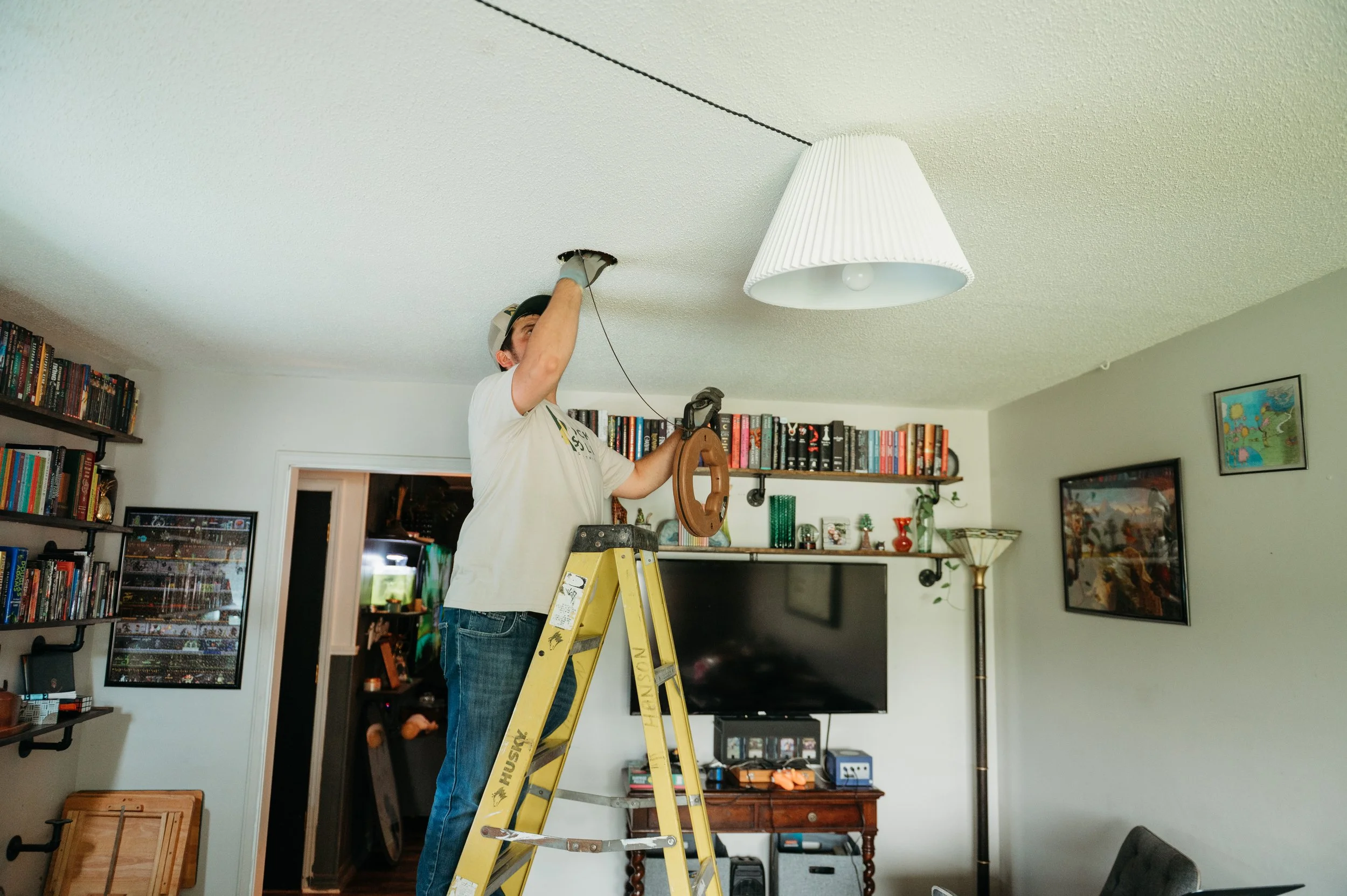
Residential Services
Keeping your home safe, comfortable, and reliably powered.
Offerings For Your Home
Residential services includes everything from start to finish and trouble shooting problems after. We wan to make your home as comfortable as possible for you.
Also specializing in electrical services in Northwest Arkansas regarding:
New Construction
Remodels
Trouble Shooting
Service Upgrades
EV installation
Data Installation
Smart Home Upgrades
Trench Digging up to 2’
Hot Tubs
-
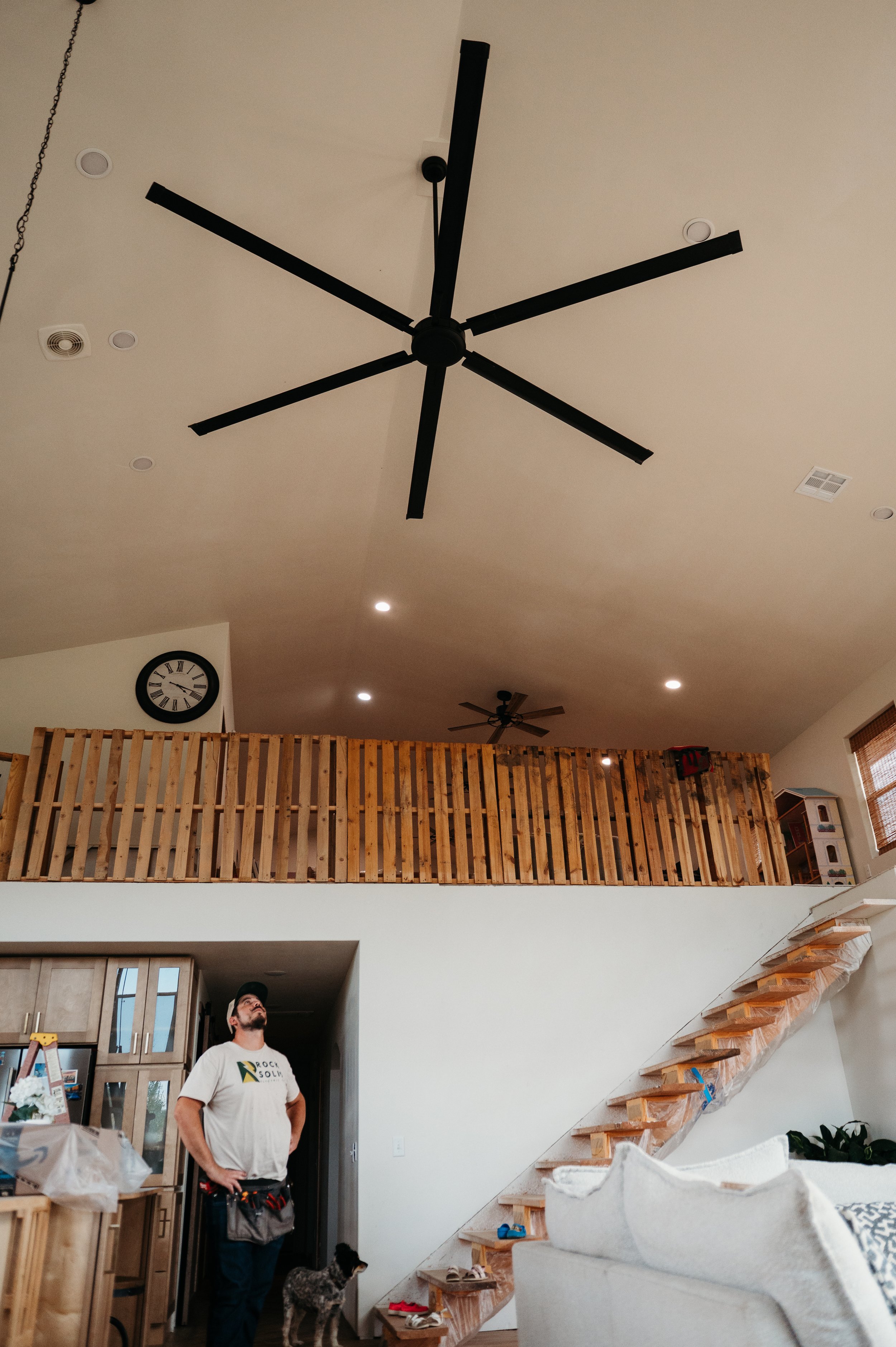
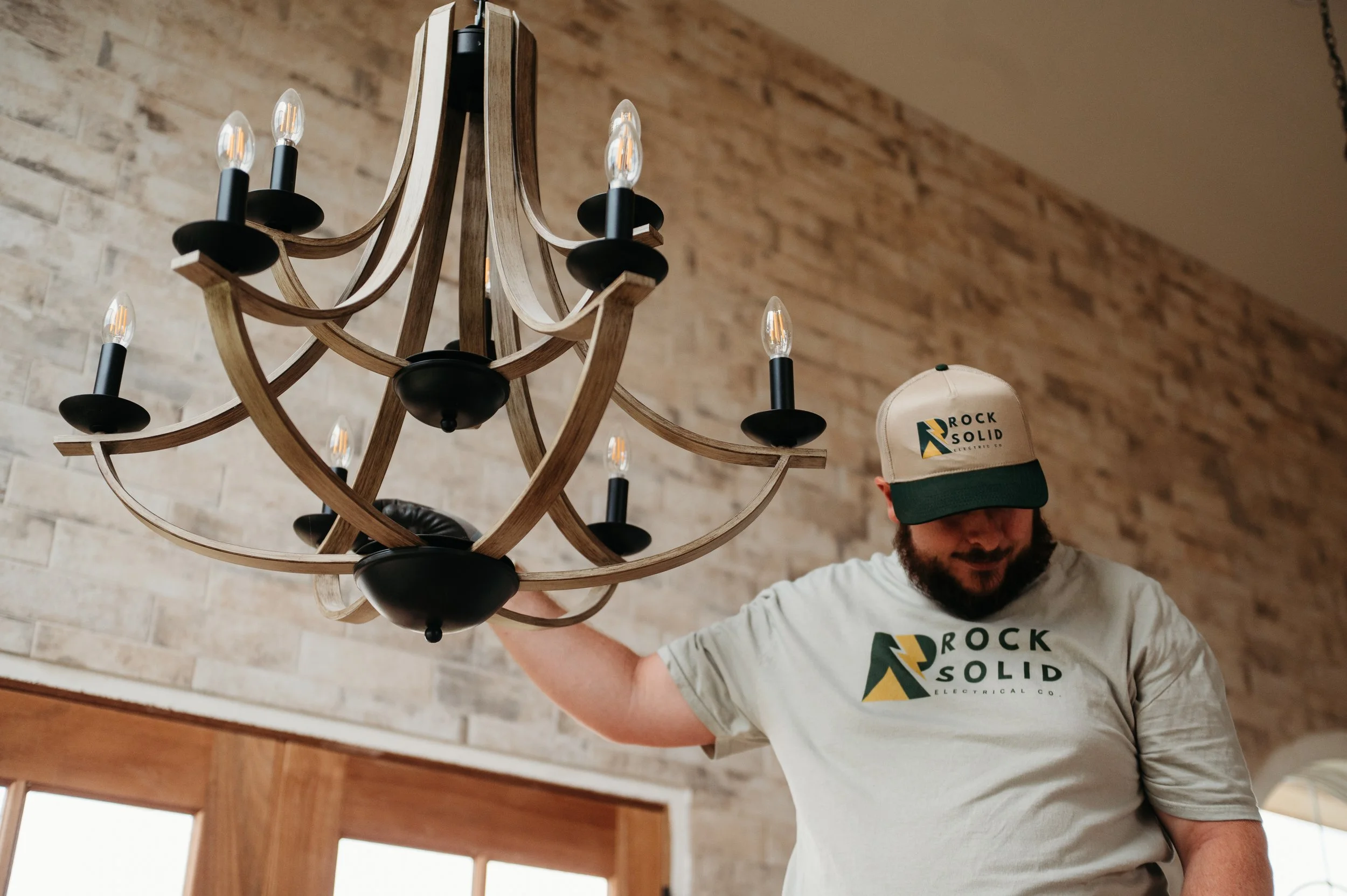
Congrats on your new home! Building a new home requires careful electrical planning. We can help you with the whole process or just the final touches.
Where should you start?
A well-rounded new construction electrical plan should include the following priority areas:
⚡ Panel & Future-Proofing
Panel Size: Opt for a 200-amp panel as the absolute minimum, or upgrade to 400 amps if you plan on adding a pool, workshop, or multiple high-draw appliances.
EV Charging: Have your builder pre-wire a 240-volt, 50-amp outlet in the garage so you can easily plug in an electric vehicle later.
Solar & Generators: We can run a conduit from the main panel to the attic or roof now to save thousands in labor if you install solar later. You can also pre-wire for an automatic standby generator.
Whole-House Surge Protection: Install a whole-house surge protector at the breaker box to safeguard sensitive electronics and smart appliances.
🔌 Targeted Outlet Placement
Many builders include the bare minimum number of code-required outlets. Be sure to request extras in these often-overlooked spots:
Kitchen & Pantry: Add outlets in your pantry (for a coffee station or microwave) and outlets on the kitchen island.
Closets & Closets: Place outlets inside master walk-in closets (for vacuums, clothes steamers, or phone charging) and broom closets (for cordless vacuums).
Exterior: Place waterproof outlets on all four sides of the house, plus under the eaves (controlled by an indoor switch) for easy holiday lighting.
Bedrooms & Bathrooms: Put outlets directly behind bedside tables and consider a discrete outlet near the toilet for a bidet.
💡 Lighting & Low-Voltage
Layered Lighting: We would love to discuss a layered lighting plan for your home, including dimmer switches for every overhead light and under-cabinet lighting in the kitchen.
Smart Switches: Consider smart switches that allow you to control lights from your phone.
Network Cabling (Ethernet): While running cables, ask to pre-wire Cat6 or Cat6A ethernet cables to key areas (living room, office, and spots for ceiling-mounted wireless access points).
-
A well-planned electrical remodel touches several essential areas across the home:
1. Core Safety & Power Upgrades
Electrical Panel: Homes over 35 years old often have 100-amp panels that cannot handle modern appliances. Upgrading to a 200 to 400-amp panel is usually required.
Re-Wiring: If your home has outdated wiring (like knob-and-tube or ungrounded cloth-wrapped lines), it must be replaced.
Dedicated Circuits: High-draw areas and large appliances require their own circuits to prevent breaker trips and fire hazards. Ensure dedicated circuits for:
Kitchens (ranges, refrigerators, microwaves)
Laundry (washers/dryers)
HVAC units and hot tubs
Home offices
2. Room-Specific Code & Convenience
Kitchens & Bathrooms: These wet areas require GFCI (Ground Fault Circuit Interrupter) outlets to prevent shock hazards, as well as multiple 20-amp small appliance circuits.
Living Areas: The National Electrical Code mandates that wall outlets be no more than 12 feet apart.
Lighting: Every room typically requires at least one wall-switch-controlled lighting outlet.
3. Smart Tech & Future-Proofing
AFCI Protection: Modern standards require Arc-Fault Circuit Interrupters in most rooms to protect against electrical fires.
Smart & Connected Living: Pre-wire for smart motion lighting, security cameras, and motorized window shades.
EV Chargers: Pre-wire your garage for a Level 2 Electric Vehicle (EV) charger to prepare for future transportation needs.
Convenience Features: Consider floor outlets for living room sectionals and additional exterior outlets for seasonal holiday lighting.
4. Planning & Permitting
The Electrical Plan: Before opening walls, work with an electrician to map exactly where furniture, outlets, and switches will go.
Permits: Substantial electrical work requires local permits and inspections by your city to ensure it meets standard building codes.
That was a lot- we are happy to go through it and make some recommendations on which rooms you are renovating and what new appliances or electronics you are adding.
-
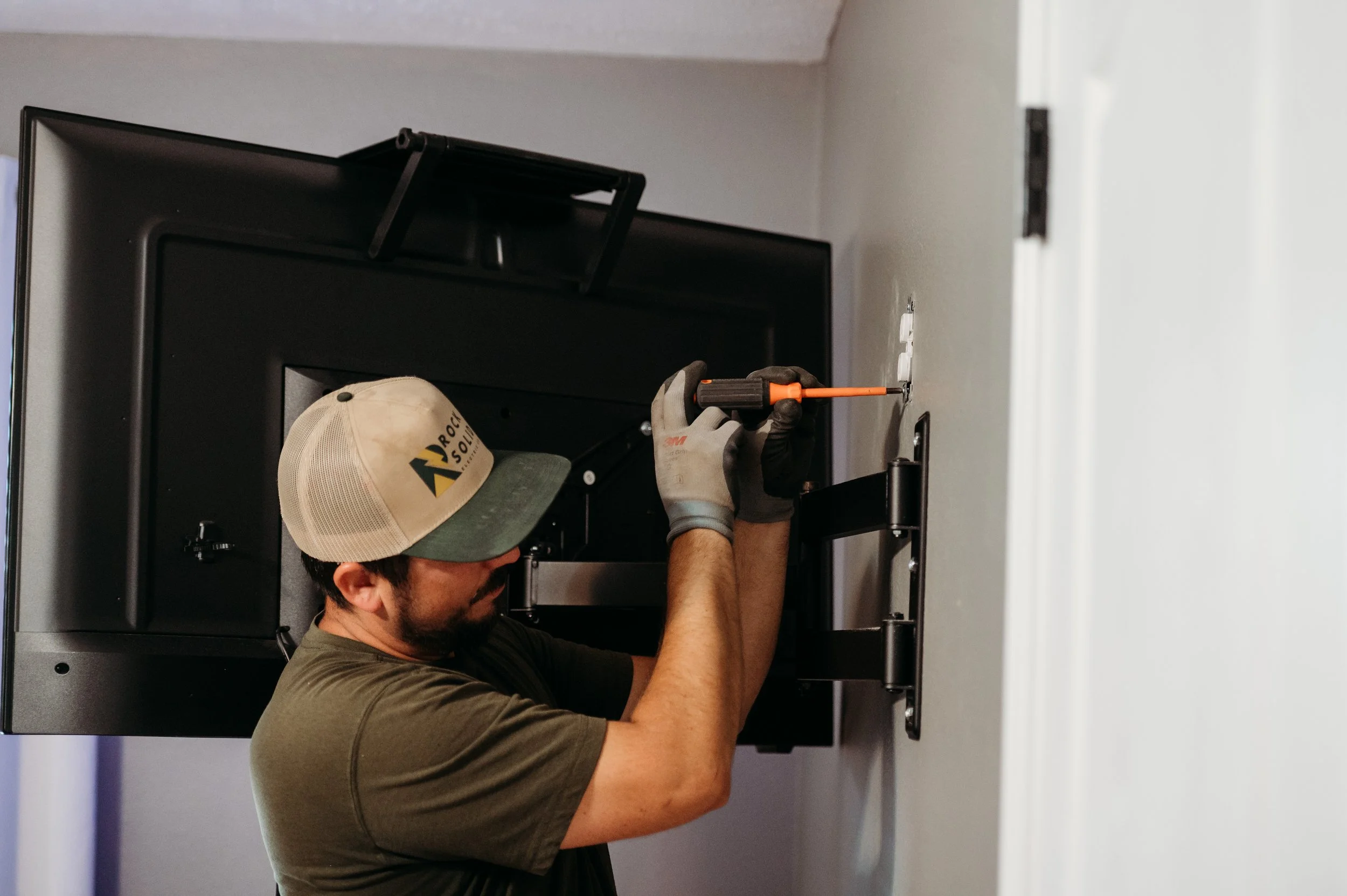
We’ll come to your home, assess the problem, and fix it safely and quickly — so you can get back to normal without worrying about electrical hazards or unreliable wiring.
What we do when we come out
Fast response and clear scheduling: Same-day or next-day appointments available. We call or text before arrival and arrive within the booked window.
Thorough safety inspection: We check panels, breakers, outlets, switches, lighting, wiring runs, and grounding to find the root cause — not just the symptoms.
Diagnostic testing: We use industry-standard meters and infrared imaging to locate hidden faults, overloaded circuits, poor connections, and heat issues.
Transparent recommendations: We explain what’s wrong, why it matters, and present repair options with costs and timelines — no surprise fees.
Code-compliant repairs: All work follows local electrical code and safety standards. We obtain permits and coordinate inspections when required.
Clean, respectful service: Technicians treat your home with care, wearing shoe covers and cleaning up before leaving.
Warranty and follow-up: Repairs include a written warranty. We follow up to make sure everything is working as expected.
Common problems we fix
Frequently tripping breakers or overloaded circuits
Dead or sparking outlets and loose receptacles
Flickering, dim, or dead lights
Hot or buzzing outlets and panels
Faulty GFCI/AFCI protection and ground-fault issues
Old, unsafe knob-and-tube or aluminum wiring replacement or mitigation
Panel upgrades and breaker replacements
Smoke detector installs and battery-to-hardwired conversions
Surge protection and whole-home safety solutions
Generator hookup and transfer switch installation
Why choose us
Licensed, insured electricians with ongoing training
Upfront pricing with no hidden add-ons
Priority for safety and code compliance
Customer-focused: punctual, courteous, and reliable
Written estimates and clear timelines
How to get us to your home
Call or text our service line or request an appointment online with your preferred date and time.
Tell us the issue, location in the home, and any urgent safety concerns (smell of burning, smoke, sparks, loss of power).
We confirm the appointment and whether to shut power off before arrival for safety.
Technician arrives, diagnoses, provides a written estimate, performs agreed repairs, and tests all work before leaving.
If you’re experiencing sparks, burning smells, persistent tripping, or loss of power, contact us now for a prompt, professional service call. We’ll fix the issue right and keep your home safe.
-
As technology advances and the number of electrical devices in homes grows, older wiring and panels can struggle to meet increased power demands. If your electrical service is unreliable, frequently trips breakers, or won’t support planned additions like new appliances, HVAC, or charging equipment, it may be time to upgrade your electrical panel.
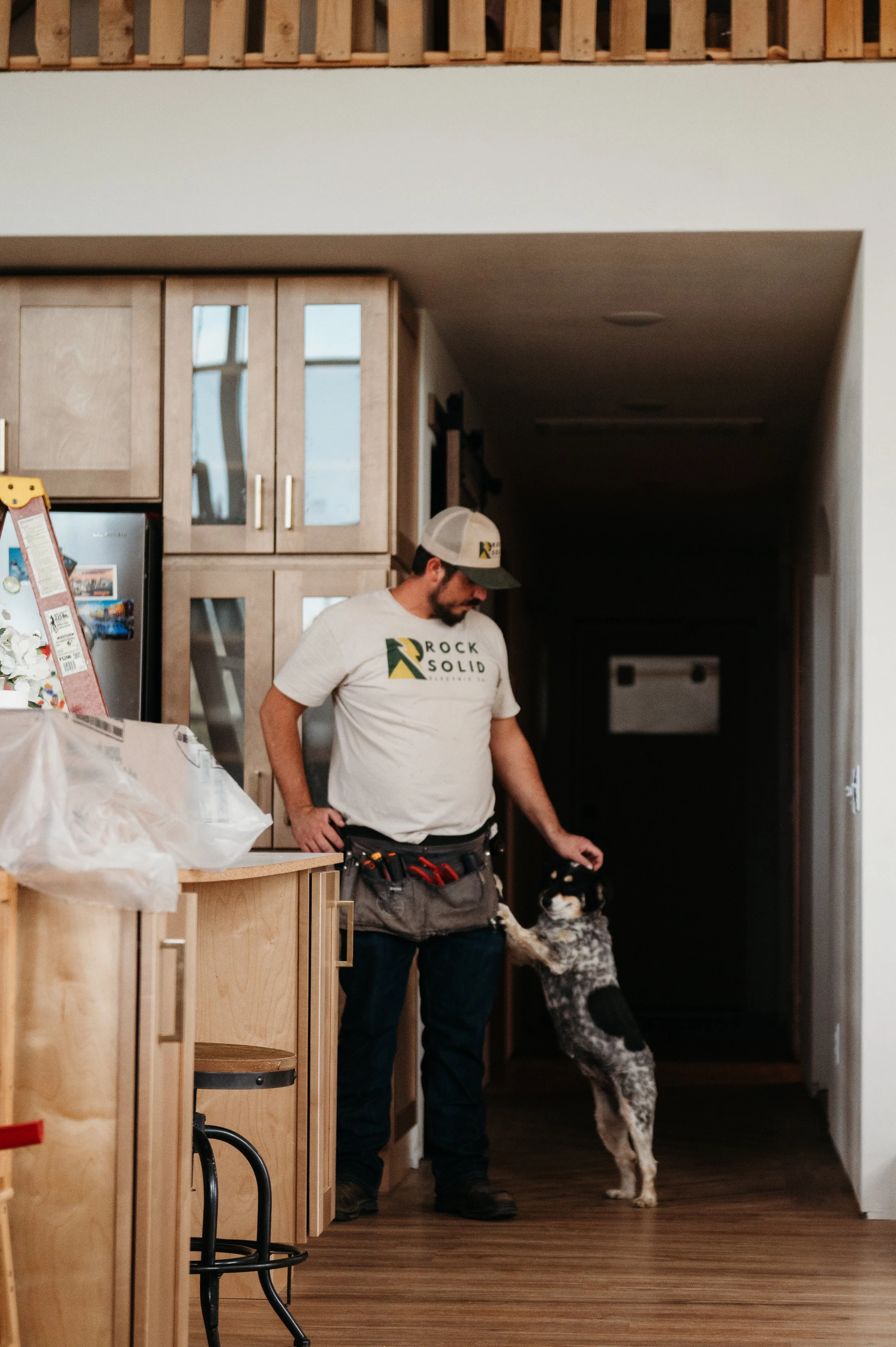
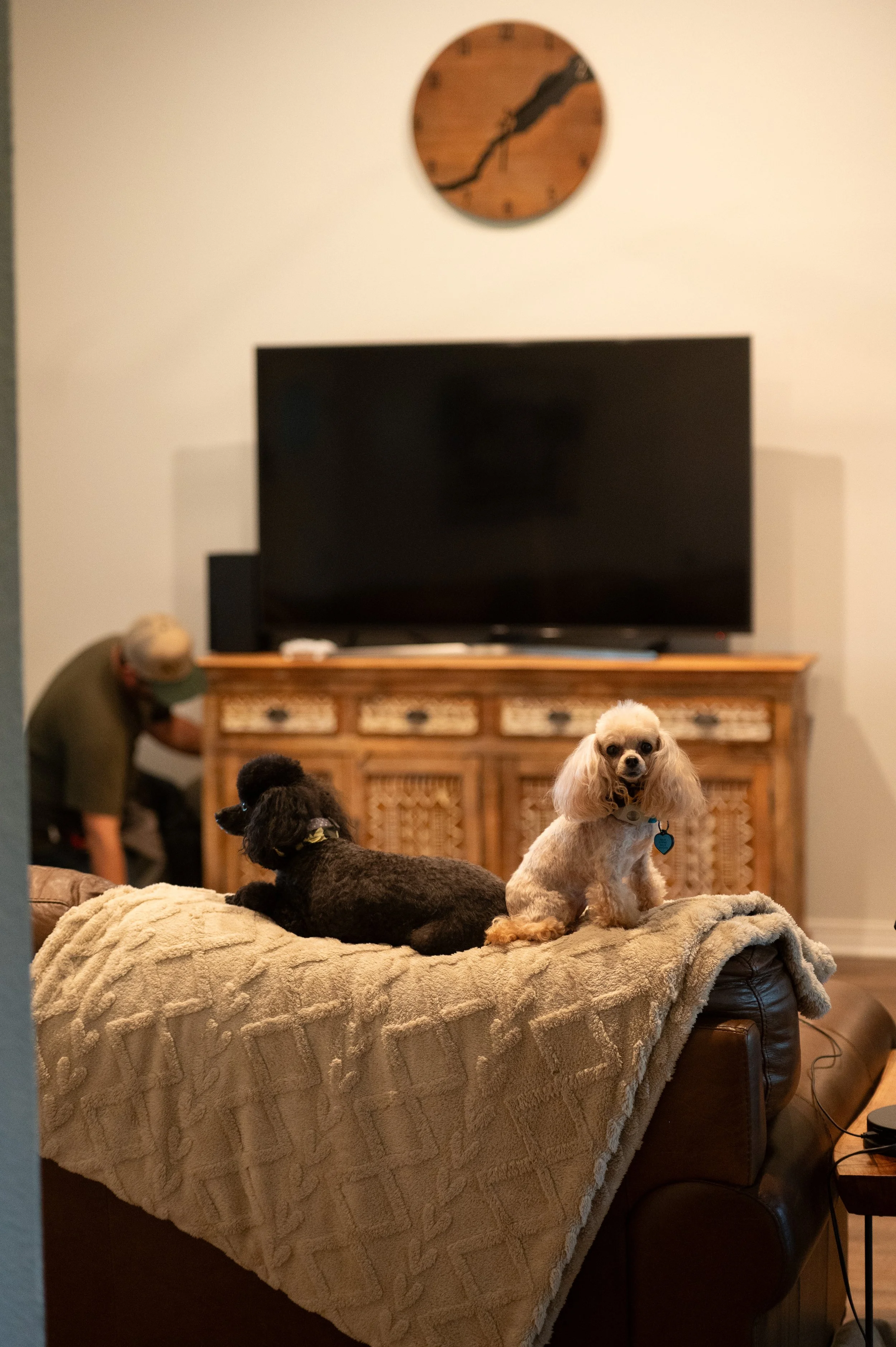
We are 100% pet friendly!
“Their attention to detail and commitment to quality truly stood out. We’ve already recommended them to others.”
– Former Customer